










Slim arms and a compact depth make the Milo sofa an easy fit in smaller living spaces.
The Best Furniture for a Small Apartment: A Room-by-Room Guide
The Best Furniture for a Small Apartment: A Room-by-Room Guide
Moving into a smaller space forces you to think more carefully about every piece of furniture you bring through the door. A sectional that looked great in the showroom can leave your living room with almost no room to move. A bed frame that photographs beautifully online can eat up so much floor space that your bedroom has no usable floor space. A dining table bought without measuring first can make pulling out a chair a daily frustration.
The good news is that small apartments can be well-furnished, comfortable, and genuinely stylish. You need to choose pieces that do more than one job, fit the actual dimensions of your rooms, and leave enough open floor space to move around naturally. This guide walks through the living room, dining area, and bedroom with specific product types and sizing guidance to help you get it right the first time. If you're setting up a new place, it's also worth reading our first-apartment checklist before you start shopping.
Living Room Furniture for a Small Apartment
What Size Sofa Actually Works in a Small Living Room?
The standard advice is to measure your room first, which is correct, but the number most people forget to check is sofa depth. A sofa that is 90 inches wide but only 32 inches deep takes up much less usable floor space than one that is 80 inches wide and 40 inches deep. In a small apartment, depth matters more than width.
For rooms under 150 square feet, look for apartment-size sofas in the 72 to 80 inch range with a seat depth between 20 and 24 inches. These give two adults comfortable seating without pushing every other piece of furniture against the walls. Sofas with exposed legs also help visually, since you can see the floor beneath them, which makes a room read as larger than it is.
If your living room doubles as a guest room, a sleeper sofa solves two problems at once. Modern sofa beds have improved significantly in both sleeping comfort and daytime appearance. Look for a model with a memory foam mattress rather than a traditional innerspring, and check that the folding mechanism opens smoothly, because one that sticks or binds becomes a real problem late at night with guests waiting.
In a studio apartment or a one-bedroom where the living room is tight, a loveseat is often the smarter choice. Loveseats typically measure between 52 and 64 inches wide and seat two people comfortably. Pair one with a single accent chair if you need more seating capacity, and you end up with a more flexible arrangement than a large sofa would allow.
Should You Use a Coffee Table or a Storage Ottoman in a Small Space?
A standard rectangular coffee table in a small living room is often more trouble than it is worth. It takes up floor space, collects clutter, and creates a visual barrier between seating areas. A storage ottoman gives you a soft surface for your feet, a lid that opens to hold blankets and remotes, and a seat for a guest. Add a sturdy tray on top, and it functions as a coffee table too.
If you prefer a dedicated coffee table, look for one with a lift-top mechanism. The surface raises to laptop height when you are working or eating, and lowers back down when you are done. Round and oval tables also prevent the corner problem that comes with rectangular tables in tight spaces.
Nesting tables are another option worth considering. Two or three tables that tuck together take up the footprint of one small table when stored, and you can pull them apart when someone comes over or when you need a surface for drinks and snacks. For more ideas on making a compact living room work, our guide on 5 ways to decorate your small living room covers layout and styling tips in more detail.
What Other Living Room Pieces Make Sense in a Small Apartment?
Beyond seating and a surface for your coffee, the living room benefits from furniture that uses vertical space. A bookcase or media unit that isgoes tall rather than wide, or floating shelves above the sofa, keeps storage entirely off the floor. TV stands with closed cabinet doors keep cords and equipment out of sight; choose one proportional to the wall it sits against so the room does not feel crowded on one side and empty on the other.
In open-concept apartments where the living area flows into the kitchen or entryway, think about how furniture reads from multiple angles. A sofa with a clean back can face the TV while still looking presentable from the other side of the room. Our article on small space living covers open-concept layout strategies in more detail.
Dining Room Furniture for a Small Apartment
What Is the Best Dining Table for a Small Apartment?
Most apartments do not have a dedicated dining room. The dining area is usually a corner of the living room or a section of the kitchen, which means the table needs to work within whatever space is left over after the sofa and other furniture is placed. The standard guidance is to leave at least 36 inches between the table edge and the nearest wall or piece of furniture so chairs can pull out and people can move around without bumping into things.
For a household of two, a round or square table that seats two to four people is the practical choice. Round tables are particularly good in tight spaces because they have no corners, which makes them easier to move around and leave more usable floor space between the table and other furniture. A 36-inch round table seats two people comfortably for everyday meals and can fit four when needed.
If you occasionally need more seating, an extendable dining table is a better investment. A drop-leaf table, for example, folds down to a fraction of its extended size and can sit flush against a wall on a normal day. A butterfly leaf table stores the extension piece inside the table itself, so there is nothing to find storage for separately. Our guide to extendable dining tables explains the different mechanisms and which one suits which situation.
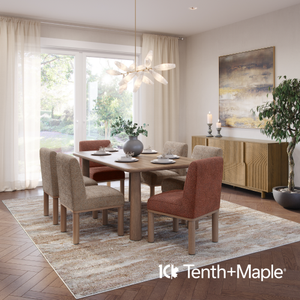
Made with everyday function in mind, the Pharwynn Dining set's small stature expertly suits dining areas limited on space.
What Kind of Dining Chairs Work Best When Space Is Limited?
Dining chairs with arms take up more horizontal space than armless chairs and make it harder to slide them under the table when not in use. In a small dining area, armless chairs are almost always the better choice. They push in flat, open up more walking space, and look less bulky when viewed from the living room.
A bench along one side of a rectangular table is another option that works well in small spaces. A bench seats more people per inch of table length than individual chairs do, and it tucks completely under the table when not in use, leaving the floor entirely clear on that side. Many dining sets are available with a bench option rather than four chairs, which is worth asking about when you are shopping.
The Gesthaven Dining set is smartly designed for everyday comfort and style.
Do You Actually Need a Sideboard or Buffet in a Small Apartment?
A full sideboard is usually too large for a small apartment dining area. A narrow console table against the wall near the dining space does the same job while using far less floor space. It holds serving dishes during meals, stores table linens in a drawer, and holds a lamp or plant the rest of the time. At 12 to 16 inches deep, a console table projects barely from the wall and does not interrupt the flow of the room.
Bedroom Furniture for a Small Apartment
What Size Bed Should You Buy for a Small Bedroom?
The bed is almost always the largest piece of furniture in a bedroom, and in a small apartment, it sets the parameters for everything else. The standard mattress sizes in Canada are: twin at 38 x 75 inches, full at 54 x 75, queen at 60 x 80, and king at 76 x 80. Bed frames typically add a few inches on each side, so factor that in when measuring.
In a small bedroom, a queen bed is usually the largest size that still allows for reasonable clearance on both sides and at the foot. Aim for at least 24 inches on each side of the bed and 36 inches at the foot for comfortable movement. If those clearances are not possible with a queen, a full is not a compromise; it is the right size for the room.
One of the best decisions you can make for a small bedroom is to buy a bed with built-in storage. Under-bed drawers can reduce the size of a dresser or eliminate the need for one altogether. Platform beds with under-bed drawers on both sides are the most practical configuration since they maximize the number of drawers and keep the storage accessible. For more on making a small bedroom work, see our guide on bedroom storage solutions.
The Walker Queen Platform Bed removes the need for a foundation or box spring and the case pieces provide plenty of storage.
Do You Need a Dresser if Your Bedroom Is Small?
Whether you need a dresser depends on your closet situation and how much clothing you own. If your apartment has a generous walk-in closet, you may not need a dresser at all, and skipping it frees up significant floor space. If your closet is a single bar with a shelf above it, as many apartment closets are, a dresser is probably necessary.
When floor space is limited, A dresser on the narrower end of the range uses a much smaller footprint than a wider piece, while still providing several drawers of storage. Position it in a corner or beside the closet door rather than along a wall where a wider piece would anchor better.
A small dresser paired with a storage bed gives you enough organization for most wardrobes without taking over the room. If you want to see how other small bedroom layouts handle the balance between storage and open space, our article on 10 simple tricks to make your bedroom feel bigger covers several practical approaches.
What Other Bedroom Furniture Is Worth Having in a Small Space?
Nightstands are worth keeping even in the smallest bedroom. A surface beside the bed for a glass of water, a phone charger, and a book makes the room more functional and the bed more comfortable to use. Look for nightstands with a drawer rather than open shelving if you want to keep the surface tidy.
A bedroom bench at the foot of the bed is a common suggestion, but in a very small bedroom, it is usually the first thing to cut. It narrows the clearance at the foot of the bed, makes moving around the room harder, and rarely gets used for its intended purpose. If you want a place to sit while putting on shoes, a small upholstered bench tucked in a corner near the closet is more practical than one centred at the foot of the bed.
Mirrors are one of the most effective tools in a small bedroom. A full-length mirror on a wall or the back of a closet door reflects light and creates the impression of more depth, which makes the room feel larger without adding any furniture at all. If you are shopping for bedroom pieces and want to think through the overall layout first, our guide on furnishing a small room walks through the planning process before you buy anything.
What Should You Keep in Mind When Buying Furniture for a Small Apartment?
Measure before you buy anything, and measure more than just the room. Check doorway widths, hallway clearances, any tight corners between the front door and where the piece is going, and stairwells if you are above the ground floor. A sofa that fits perfectly in your living room is useless if it cannot make it through the building entrance. Most furniture retailers will provide exact product dimensions on their website, so use those numbers against your measurements before you order.
Prioritize pieces that offer built-in storage. In a small apartment, every piece of furniture that also stores something is doing two jobs, which means you need fewer total pieces. A bed with storage drawers, a coffee table with a lift top, a TV stand with cabinets, and a console table with a shelf all reduce the amount of standalone storage furniture you need to buy.
Think about colour and visual weight. Dark, heavy-looking furniture makes a small room feel smaller. Lighter tones, pieces with exposed legs, and furniture with clean simple profiles all help a room feel more open. That does not mean everything needs to be white or beige, but it does mean avoiding bulky, skirted, or overly ornate pieces in rooms where floor space is limited.
Finally, buy fewer pieces and buy them well. A small apartment furnished with five well-chosen, quality pieces looks and functions better than one filled with fifteen items that were purchased quickly without a plan. Start with the essentials: a sofa or loveseat, a bed with storage, a dining table that fits the space, and a dresser if your space requires one. Add pieces gradually once you have lived in the space and understand what you actually need.
Not sure how to measure a couch or dresser? The short video below walks you through it:
Frequently Asked Questions
What furniture do you need for a first apartment?
The essentials for a first apartment are a bed (with storage if the bedroom is small), a sofa or loveseat, a dining table with chairs, and a dresser. Beyond those four categories, add pieces based on how you actually live rather than what a fully furnished room is supposed to look like. A coffee table, nightstands, and a TV stand are useful but not necessary right away. Our first-apartment checklist covers the full list of what to prioritize when you are furnishing a new place.
What is the best sofa for a small apartment?
Look for an apartment-size sofa between 72 and 80 inches wide with a seat depth under 35 inches. Sofas with exposed legs read as lighter in a small room. If you need guest sleeping space, a compact sofa bed with a memory foam mattress handles both functions without requiring a separate guest bed. A loveseat is worth considering if the room is under 120 square feet, since it gives you comfortable seating for two while leaving more usable floor space.
How do I know if furniture will fit in my apartment?
Measure the room length and width, then measure every doorway, hallway, and corner the piece will need to pass through during delivery. Compare those numbers against the product dimensions listed by the retailer. For sofas and sectionals, also check the diagonal height of the piece, since that is the relevant measurement for getting it around corners and through doors. Painter's tape on the floor to outline the furniture footprint before you buy is a simple way to check that the size feels right in the actual space.
Are apartment-size sofas comfortable?
Yes, a well-made apartment-size sofa is just as comfortable as a full-size sofa. The difference is in width and sometimes seat depth, not in cushion quality or construction. When shopping in person, sit the way you normally sit when you are at home, not the way you sit in a showroom. If you tend to curl up rather than sit upright, check the seat depth carefully, since shallower seats suit people who sit with their feet on the floor but can feel restrictive if you prefer to tuck your legs up.
What is the best dining table for a small apartment?
A round or oval table with an extendable leaf is the most practical choice for most small apartments. On an ordinary day, a compact 36-inch round table seats two and leaves the surrounding area open. When you have people over, a drop-leaf extension or a butterfly leaf adds seating without requiring you to own a larger table year-round.
How do you furnish a studio apartment?
The main challenge in a studio apartment is that one room is doing everything: sleeping, living, dining, and often working. Start by identifying the non-negotiables such as the bed, a seating area, and a surface for eating. Use furniture to define zones rather than walls. A sofa placed with its back to the sleeping area creates a visual division between the living and bedroom zones without closing off the space. Choose pieces that do double duty wherever possible: a storage bed, a sofa bed or loveseat that converts, a dining table that folds against the wall when not in use.
Furnishing a small apartment well comes down to a few consistent principles: measure before you buy, choose pieces that do more than one job, and resist the temptation to fill every corner. A room with fewer, better-chosen pieces is easier to live in, easier to move around, and easier to change as your needs shift. Most people find that the apartments they feel most comfortable in are not the ones with the most furniture.